8

My current home project is putting RG-6 in the walls instead of through the cold-air returns and across the carpet between rooms. Thanks to some forethought during previous remodeling projects, laying the cable and getting it in the walls is the easy part.

Right now, I am stuck on crimping the stuff.

I bought a crimper, a 50 pack of F-connectors, and a 500' box of quad-shield RG-6. No matter what I do, the connectors slide off the end after crimping. I followed the instructions that came with the crimper, googled, watched some youtube videos, but nothing seems to work.

What I do is strip off 1/4 inch around the inner connector, then an additional 1/4 inch of the outer sheath. Inside there is foil and what I can best describe as tinsel. I fold this back, leaving the inner layer of foil on the plastic insulation. I then push on the F connector, using my channel-lock to grip it while pushing.

The problem is that it appears not to slide all the way on. The connector has two circular parts, and it looks like the inner one is supposed to go between two layers of the cable. However, it barely goes in and it starts pushing and distorting the outer layer before it just won't go anymore.

If I crimp it at this point, it doesn't have anything to hold on to and it slides right off. I can also see some of the foil and metal sticking out from underneath the connector, leading me to believe it is not on all the way.

What am I doing wrong?

Edit: the issue was I was using dual-shield connectors with quad-shield cable. At first I thought they would work with both, but I checked the package again and I was wrong. However, I chose to pick the answer to use compression connectors since I went that route and it really was a lot easier with better results.

Edit: here is what I bought. I'm planning on buying compression tools and trying that instead.
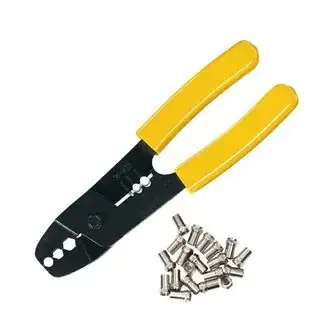
Crimper

enter image description here

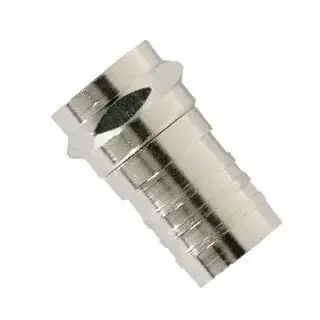
F-connectors

enter image description here

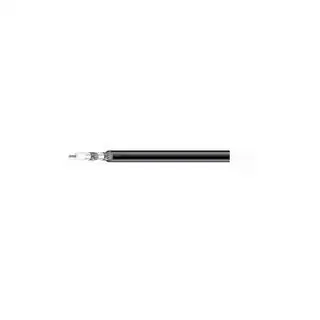
Cable

enter image description here

  • You're pulling a few ethernet cables while you're at it, right? – Jay Bazuzi Dec 27 '11 at 17:54
  • @Jay - not right now. It's easy enough to do since the walls are accessible from the attic, already have 1" holes where I fished the RG-6 through, and I have a PVC pipe going all the way from the basement to the attic through the bathroom wet-wall. But I do have a box of CAT-5e and eventually plan on putting the router and a 16 port switch in the basement next to the cable modem. –  Dec 27 '11 at 18:56

3 Answers3

9

I have the same problem with the two piece, so I use the compression type. They cost more money, but they are simply worth it. I've never had one pull off.

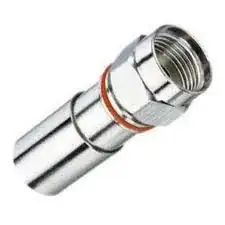
RG6 Connector

This is the style most cable and satellite companies use.

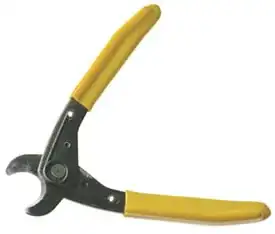
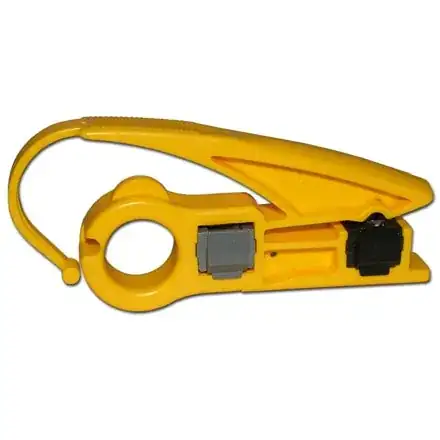
Cable Cutters

Never use electrical diagonal cutters or dykes to cut cable. They flatten out the end. Use cutters like this.

Cable Stripper

Always use a good cable stripper, never use a razor knife. You never want to nick the inner copper wire.

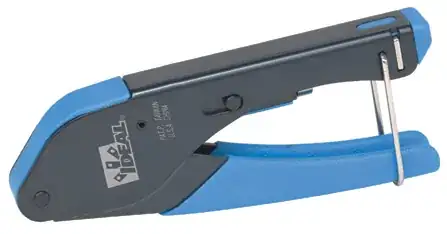
Compression Tool

The compression connector can run as high as $200.00. I've seen this economy compression tool at Lowes for under $25.00 and it includes a hand full of connectors.

I can't say you will never have problems with them. but I've never had a problem with ghosts or snow on my tv's since I started using these tools.

Added Please remember for every splice or connector you loose around 25%, or it could be worse for bad connections. Don't daisy chain connections.

lqlarry
  • 7,587
  • 1
  • 19
  • 37
  • After I bought the tools and started using everything I read about the compression tools being better. I might have to pick some up tomorrow. I really don't want the connections inside the walls falling out, since that could happen years down the road and wouldn't be an obvious thing to troubleshoot. For now if I can get a decent connection using the crimp-style connectors that would be good enough. I have enough slack that I can cut the ends off later if I have to, and would allow me to get the cables up off the carpet and secure the vents. –  Dec 27 '11 at 02:51
  • @John Gaughan I wish I could help you on that, but I never had good luck with the two piece style. Good choice on the cable though. I changed out the cable from the wall to the cable box with quad shield and the picture improved from just the few feet that I ran. – lqlarry Dec 27 '11 at 02:59
  • @TomG: did you mean compression? If so I have to agree. The cable co came out recently to upgrade our service and redid the cable from the outside to the modem/splitter inside, and they used heavy-duty RG-6 with compression connectors. Those things are rock-solid. I'm not sure if it's the upgraded internet or the better quality cable, but I notice the internet doesn't cut out every hour or two like it used to. We don't have digital cable yet but the analog signal is better too. –  Dec 27 '11 at 03:11
  • I recommend Thomas & Betts Snap-N-Seal (I am not affiliated with them). This is what all of the cable companies use and they just go on so well compared to other compression fitting. Also, if you are running in the cold-air return, make sure you use plenum-rated cable as this help prevents fire from spreading along the cable. – Steven Dec 27 '11 at 04:29
  • There are a lot of better compression tools than the one I used as an example. The one I have does bnc and other types, but I got mine from a factory rep and it saved me over $100.00 (actually I got it for free thus the savings). I do sell the economy one where I work and it is great for the diy'ers, but people serious about the investment as people in the electrical and telcom trades are, buy the better one. – lqlarry Dec 27 '11 at 04:44
  • @Steven - I moved in with my fiancee and she is not very good at this sort of thing, so she ran all the cable through the cold-air returns. My project is to lay new cable (the current stuff is RG-6 but not very good quality) the correct way, removing the existing stuff. So I won't need plenum. We actually put a PVC drain pipe vertically through the wet-wall when remodeling the main bath, so we can easily push cable from the basement (where the splitter is) to the attic (where the tops of the walls are). –  Dec 27 '11 at 17:10
  • @JohnGaughan - thanks - deleted original and reposted here with correction: you will be much happier with the comrpession connectors and tool. I bought an economy one at the local big-box store and have crimped maybe 30 or 40 connection over the past year; the tool is much easier to use and makes nice-looking connections, too. – TomG Dec 27 '11 at 21:35
  • So I bought compression tools and have been trying to get this working. The issue is now that while I crimp the connector, the cable is being pushed out the other end of the crimper. So when I am done, the center wire is inside the connector and the plastic insulation is not flush with the inside of the connector. This looks nothing like the compression connections done by the cable guy, so I know I'm doing something wrong. Any ideas? –  Dec 27 '11 at 22:54
  • Please disregard my previous comment. I practiced more and learned that I need to press the connector onto the cable more. In addition, I was using older cable and it must not have lined up correctly. Once I finished that run and switched the new cable, the connectors slid right on, it compressed easily, and the cable is perfect. –  Dec 28 '11 at 00:18
  • Also, I did pick up a few extra tools such as the "round" cutters, an all-in-one stripper that cuts pre-measured amounts both around the wire and the sheath, and the compression tool itself. I spent a few more dollars on the Klein brand, and my electrician brother approves. –  Dec 28 '11 at 00:24
4

While I agree with the other answer about using a compression tool , and the other tips provided, it sounds like your issue is mainly getting the connector properly onto the coax.

With higher-end cable, the connectors usually go on pretty easily, but I've found some cheaper cable to be a bit stubborn. Or sometimes it is cold and your hands hurt and you just can't eaisly push on the connector.

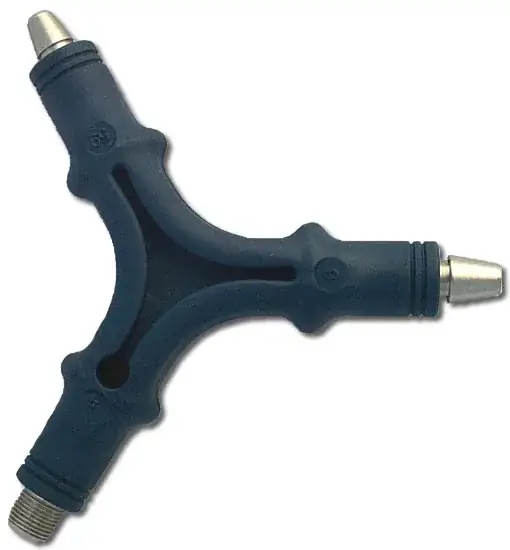
For these scenarios, they make tools which have a male end on it which you screw the connector onto, and then use to push it onto the cable, down past the inner layers of the cable.

This particular tool also has 2 ends for flaring the cable, though I've never personally needed to do that.

F Connector Installation and Flaring Tool

Steven
  • 27,594
  • 9
  • 53
  • 88
  • I wound up using a compression tool instead, but you were spot-on about the quality of the cable. I had one run of older, lower-quality (but still quad-shield) cable and I had to wrestle with it. The newer, better-quality cable slid into the connector like butter. Once I compressed it, there is no way it will come loose. –  Dec 28 '11 at 00:19
3

I'm not really sure what connectors you are using, but it is possible you have a mismatch between the cable and connector. Usually the bare center conductor needs to be about 1/2" long (can be trimmed after install if too long), then about 1/4" of center conductor insulation exposed, followed by stripping apx 1/2" of outer insulation. The inner most barrel of the connector should fit under ALL the foils and ground braid, thus sandwiching the shielding and foils between the two metal sleeves of the connector. Some connectors only want to crimp the shields within the connector while others require that the outer insulation be sandwiched with the shields before crimping. It almost sounds to me that your cable is a bit too large in diameter for the outer insulation to fit comfortably between the two sleeves before crimping, perhaps because you have premium shielded cable and connectors for single braid shielding cable.

An other option are the new twist on type connectors from Ideal. They have a diagram of how to prep the cable, then simply insert the end of the cable and twist until tight. I have used them a lot lately with good results.

To be honest, I'm guessing here as I can't see what you have for the deminsional specs of the wire and connector.

shirlock homes
  • 58,152
  • 3
  • 84
  • 166
  • The outer ring of the connector is actually slightly larger than the outer diameter of the cable. The inner ring of the connector is slightly larger than the plastic insulation in the cable. That is why I left the inner foil on. Sounds like the connector might not be a good fit for the cable. I'm going to pick up some compression tools later today and give that a try. –  Dec 27 '11 at 17:13
  • Please see my question again. I edited it to add links to the crimper, connectors, and cable that I bought. –  Dec 27 '11 at 17:23
  • don't leave the foil on the inner conductor, it is connected to the shield and could short your center conductor to ground. be sure only the center conductor and it's insulation are in the center sleeve of your connector. – shirlock homes Dec 27 '11 at 18:13
  • the connectors you pictured are probably the worst and cheapest ones out there, I personally have dozens of them collecting dust cause they suck! Bring in a piece of your wire and ask to try the tool with an upgraded connector that is mated for the tool. I see you used Lowes, they are great about letting you open boxes and try things out. They will alsop take back what you can't use, good return policy. Don't leave the store until you have seen the tool and connector work on your cable. You might even luck out and find someone there that can give you a little lesson. Good luck. – shirlock homes Dec 27 '11 at 21:51
  • look at the screw on connectors while you are there. NO tool required. I have had good luck with them, used them in my own home that I am currently remodeling. – shirlock homes Dec 27 '11 at 21:53
  • I would also like to point out that I was using dual-shield connectors on quad-shield cable. I thought they would work with both, but I was mistaken. So you were correct that I did have a mismatch between cable and connector. –  Dec 28 '11 at 00:21