5

As I rewire my room, I'm going to add some pin spots in the ceiling to illuminate artwork on the walls. I would like to have them switched, but not with a regular sized commonly available switches. Instead I'd ideally like small round toggles or push-button switches placed near the artwork itself unobtrusively.

So far, my searches result in either bigger switches, ones for small electronics devices, automotive switches or ones intended for low voltage cabinet lighting. What term should I be searching for to find what I'd like? In an ideal world, they would be manual with a wifi option and possibly a dimmer option, but I'd settle for just a simple psh-button on/off.

Alternatively, if you have a suggestion for a work-around I'd appreciate that too.

isherwood
  • 129,178
  • 7
  • 160
  • 386
Trevor
  • 775
  • 7
  • 15
  • 4
    Unfortunately, this question as asked seems to be asking for a product recommendation, which is off topic here. But with your requirements, you will need to be looking at either going fully low voltage, or look into some sort of low voltage control system for line voltage, which would typically be used more in commercial buildings. – PhilippNagel Feb 04 '22 at 14:06
  • 1
    Thanks for your input. I tried my best not to ask for a specific product recommendation but I couldn't find the words to ask my question without it seeming like that. I thank you for your low-voltage suggestion, but in light of the answers received so far, I'm thinking a remote for a smart switch or smart bulb is the direction I should be heading. – Trevor Feb 04 '22 at 14:29
  • 16
    I don't consider this a product recommendation request. It's about a solution to a problem involving a hypothetical _category_ of products. – isherwood Feb 04 '22 at 15:30
  • Would a purely-software solution work for you? No physical switches, just a phone/tablet app? – Criggie Feb 05 '22 at 22:31
  • Not really. I'm installing other wifi-enabled switches for room lighting which will likely be useful in that way, but for the art I wanted it to be controlled close to the art by anyone visiting. – Trevor Feb 06 '22 at 10:40
  • Have you considered an 'architrave switch' - like a standard switch but in a narrower enclosure? – Frog Feb 07 '22 at 02:13
  • Alternatively, you could incorporate the switch plates into the art itself - I've seen cases where a switch was placed on a wall with a full painted mural on it, and they just painted right on the switch plate as part of the mural. From a distance it's nearly invisible. (I don't recommend painting the switch itself, as the paint might gum it up so it doesn't work, and could potentially leak in and cause electrical problems.) – Darrel Hoffman Feb 07 '22 at 13:53

6 Answers6

34

Low voltage is the key. LEDs are naturally low voltage devices. That is different from traditional incandescent. While incandescent bulbs can be low voltage (e.g., in cars), they require a lot of power, which means either higher voltage (safety issues) or higher current (wire size issues). LEDs can produce a significant amount of light using low voltage and low current, so you get to use small wires and use safer low voltage components.

There are packaged low voltage lighting systems, but for a real custom system, as you describe, you can essentially plop a right-sized, UL/ETL/similar listed power supply somewhere and then run low voltage wires to that power supply without (at least in most jurisdictions) the same restrictions as with 120V or 240V power. The end result can be a mimic of a traditional lighting system, with each switch controlling a light or set of lights, to an intelligent system with a microcontroller wired up to several switches and lights, to a WiFi/remote controlled "do anything" system.

manassehkatz-Moving 2 Codidact
  • 105,505
  • 9
  • 125
  • 304
  • 4
    Absolutely. Came here to write this answer (but happy for you to get the points). Low voltage wiring greatly reduces the safety issues and therefore, the Code requirements. – Harper - Reinstate Monica Feb 04 '22 at 20:50
12

It's not really a matter of the switches. House wiring needs to connect in approved boxes, which in turn need to be accessible. The somewhat large plate is a symptom of those requirements.

I suggest that you consider either relocating the switches to a less conspicuous area, or using remotely-controlled smart switching. You may find modern smart bulbs in a configuration you can use in your fixtures, or you may find control modules that can be installed inline.

isherwood
  • 129,178
  • 7
  • 160
  • 386
5

Low voltage, individually addressable, smart LED bulbs would probably be the way to go. They could all be fed from one transformer to simplify the power requirements

You can get a small, discrete, momentary contact switch to locate next to each piece of art. This would allow you to get creative with, for example:

  • A single tap to toggle the light for this art piece
  • A double-tap for 3 spots on
    • This one
    • One artwork to the left
    • One artwork to the right
    • A long tap to turn them all off

Other options available and limited only by your creativity.

FreeMan
  • 43,073
  • 21
  • 81
  • 173
3

If you're looking for a subtle artistic way to control 120V lights, here are some options.

I have to get it out of the way... there is exactly what you are asking for: An electrical switch that is installed in a junction box and beautifully and artistically buried in drywall with no face plate. It's gorgeous, one of a kind, and it's insanely expensive. But if you're building a sort of art gallery in your home, you may be willing to do something like this. Here's a photo of their outlet, because their switch is so subtle it just looks like a circle and gives no sense of scale.
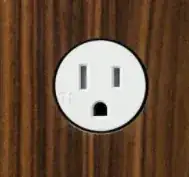
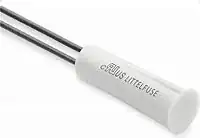
Or, go with a 100% low voltage solution which you can control with switches from automotive or industrial, you can use touch, proximity, whatever you want and you don't need boxes, covers, etc.


enter image description here. enter image description here

Some electronic switches have very limited current capacity so you'd have to use a relay as with the next suggestion for 120V lights.

Or, with 120V lights use relays. See this answer to my question about controlling a closet light. You could use the same relay, which would have to be installed in the light's junction box, and a pair of LV wires going to wherever you want the switch. You could use that relay's included magnetic reed switch, hidden in the plaster of your wall, with a clever and pretty magnetic toggle that you design. Or you could replace the reed switch with any kind of switch at all. Doorbells, Automotive, electronic, you could put capacitive switches in the frames of your art, foot plates, you name it.
enter image description here

Or Put motion sensing switches (normal 120V ones in normal boxes) in the ceiling above your art.
enter image description here

isherwood
  • 129,178
  • 7
  • 160
  • 386
jay613
  • 34,254
  • 2
  • 43
  • 136
  • 5
    How is your first suggestion legal? It's apparently not accessible. – isherwood Feb 04 '22 at 15:13
  • @isherwood excellent point! However, on their website, the have a [removal guide](https://resources.22system.com/22System-RemovalGuide.pdf) (PDF). You simply pull the plug/switch out of the wall using their installation/removal tool (at only $80, it's a bargain!). They claim that, "An installation tool is required for each 22 System installation (sold separately)." So it's a heck of a profit center for them, too! It does mount to a standard wall box, the cover plate is embedded behind the finish material and the tool allows "easy" removal for wiring access. (con't...) – FreeMan Feb 04 '22 at 15:18
  • 3
    I seriously doubt that any electrical or fire inspector would accept that as a procedure. – isherwood Feb 04 '22 at 15:20
  • 1
    @isherwood "apparently" is their whole convoluted, expensive gimmick. It does look nice though. I can't speak for every inspector of course. It's easy for me to paste a link. :) – jay613 Feb 04 '22 at 15:20
  • Loads of gotchas, like each device must be served by one set of wires, so no daisy-chaining devices - there's got to be a box elsewhere with all the junctions and each one must be at the end of the line. The price ($190-265 per switch) is just the beginning! – FreeMan Feb 04 '22 at 15:20
  • 1
    Insanely expensive is correct, and now that I'm conscious of the accessibility issue it's a non-starter - beautiful as it is. Regardless of whether it would pass or not, I'd rather comply with intent of code. The LV relay and magnetic reed switch has my mind racing though. – Trevor Feb 04 '22 at 15:52
  • They are UL & cUL (Canada) certified according to their web site. I'm not trying to promote these and I can't speak for inspectors. They are legitimate to some extent and they seem relevant to the question. I would leave it to OP to determine practicality and local acceptability .... Edit: which I see has has done :) – jay613 Feb 04 '22 at 15:56
  • Ah, glad you found it, @jay613. In my quick perusal, I did not. I retract my comment. – FreeMan Feb 04 '22 at 16:02
  • 1
    For the record, I did not expect OP to select the 22 Systems switch. I thought it had to be part of the answer because it suits the question so perfectly. But a relay and a magnetic switch hidden in the wall opens the door to clever, beautiful and thematic ideas for someone looking to complement their art displays. There's a whole industry of switches for home flight simulators and [rocket ships](https://www.concordaerospace.com/collections/project-apollo) ... depending on what imagery you want to invoke, you could use anything if it's LV. – jay613 Feb 04 '22 at 16:04
2

Use smart spots. You can buy smart spots that can be operated with small battery powered remote switches that just send a radio signal. I use zigbee, that standard that is also used by Philips Hue and Ikea Tradfri because I think it is one of the most stable ones. It also gives the option to dim the spots or change white balance or color, depending on which spots you buy.

Orbit
  • 179
  • 5
1

It's not readily available (or certified) outside Aus/NZ, but Resene SmartTouch or a similar product could work.

It uses a conductive paint with a cable back to a control module (which could be located behind a normal light switch, or e.g. in a box in a ceiling space). Capacitive coupling is used to detect when people touch the surface, similar to touch lamps or cellphone screens.

That area could be an unmarked area of wall, or something visible with e.g. a colour change, a symbol, or a sticker.

https://www.youtube.com/watch?v=92RfqQ7PffU

https://www.youtube.com/watch?v=yfT5AVvfu6Q