This is the basic rationale for the expansion of AFCI. AFCI = Arc Fault Circuit Interrupter. That crackling sound? That's the sound of arcing. But it isn't always audible to people. In fact, since it is that's a really bad sign of how severe the problem is.
An AFCI is typically (not always) installed in the breaker panel, in combination with a circuit breaker. It contains a very small computer that "listens" for the electrical equivalent of the crackling noise. When it happens, it shuts off the circuit. However, most older houses don't have AFCI, so we have to rely on the old-fashioned ways of detecting the problem:
- Strange noises
- Warm receptacles
- Electrical burning smell (I had that once many years ago - it took me a long time to realize what was going on and replace the problem receptacle. Now I know the trouble signs.)
- Intermittent problems with electrical circuits (lights flashing or things sometimes work, sometimes don't work).
The problems that lead to arcing can be anywhere, including:
- Rodent or other damage to wires inside walls
- Loose screw connections on receptacles, fixtures and switches
- Loose wire nuts in junction boxes
- Backstab connections gone bad
In your case, you have at least one instance of the last issue - backstab connections gone bad. In particular, backstab connections can go bad over time especially with heavy use. Heaters use a lot of power - typically 1500W, sometimes for hours at a time, which can push marginal connections such as backstabs to their limit.
Due to the way a typical circuit may have several receptacles in different rooms, combined with using receptacles as a way to daisy-chain power connections around the house, backstab connections on a receptacle in one room that doesn't have anything plugged into the receptacle can carry the full 1500W from the heater. So multiple receptacles and/or connections can be related to a single problem.
The good news is that there is a reasonable chance your problems are entirely due to backstabs and/or failing receptacles. Here is how I would go about it:
- Get the basic tools of the trade:
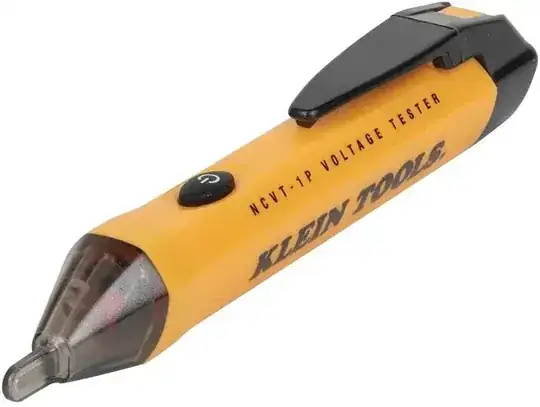
Use the NCVT to double-check that a receptacle or switch or fixture that you think is off is actually off and that no other wires passing through the box from a different circuit are on. You always want everything in a box off when working on it.
This can help with checking neutral/ground continuity, checking voltage, etc. Lots of things. Cat II is the minimum for working on 120V circuits safely, CAT III is better.
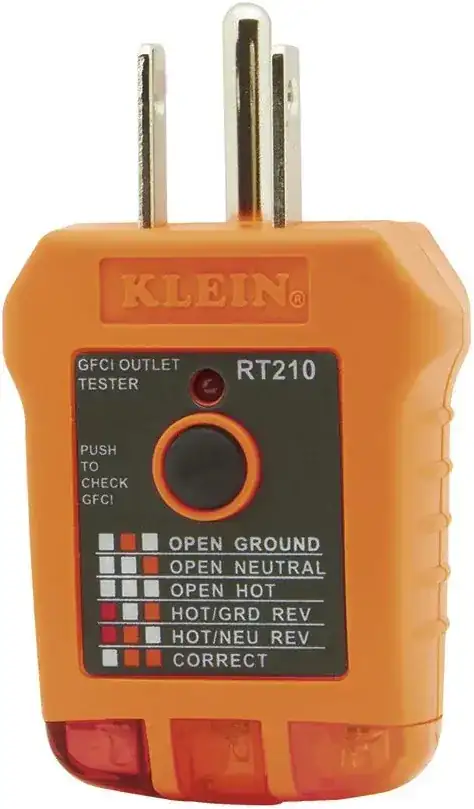
This is particularly helpful if you are checking and/or replacing a bunch of receptacles. Harper calls this the Magic 8-Ball because the messages don't always mean much. But this tool is quite useful if you understand the limits of its capabilities.
You can often get these (or similar) combined. Stick with a known brand with UL or ETL listing or buy from a local hardware or big box store. Samples here from Amazon because easy to get nice pictures, but beware that a lot of electrical tools and other stuff Amazon sells is not UL or ETL listed, which is important for safety when working around 120V and 240V circuits.
Duct tape is better than nothing. But it is not designed or rated for electrical use. Get a multi-pack of colorful electrical tape. As with the tools, make sure it is UL or ETL listed. Any color can be used to cover up a bare wire. But preferable is to use tape that matches the original insulation (black, white or red most of the time). Plus colored tape is very useful when working on 3-way switches and other circuits to indicate function of wire and to indicate white wires that are not neutral.
If you need any new receptacles, use receptacles that are a step up from the bottom - typically around $ 3 instead of $ 1 each. Two big differences with better receptacles are: 1 - that they include "screw to clamp" (they may call it by another name) which lets you put wires straight under a screw instead of having to make a hook, but still use the screw to tighten the connection instead of relying on the unreliable backstab, and 2 - they are self-grounding, so if you have a properly grounded metal box then you don't need a separate ground wire. Here is a sample Leviton Commercial Grade receptacle from Home Depot:
I would pick up a couple of receptacles before starting on this little project so that you have everything you need, instead of being tempted to reinstall a "maybe" receptacle.
When all done, turn power back on. If the breaker trips right away then you may have a wire sticking out in the wrong place. Sometimes a wrap of electrical tape (any color) around the screws is helpful. Also make sure that all unused screws are tightened down.
If everything works, check with your Magic 8-Ball. If it isn't right, you probably have a wire out or wires swapped.
And once you have finished all the receptacles on the circuit, if you still have crackling noises then ask a new question.


